EU lifts ban on Turkmenistan Airlines
Between 2002 and 2004, severe rigidity arose between Turkmenistan and Uzbekistan due to bilateral disputes and Niyazov’s implication that Uzbekistan had a task in the 2002 assassination attempt. In the parliamentary elections of December 2004 and January 2005, only Niyazov’s party was represented, and no international screens participated. In 2005, Niyazov exercised his dictatorial power by closing all hospitals outside Ashgabat and all rural libraries. The yr 2006 noticed intensification of the developments of arbitrary coverage modifications, shuffling of top officials, diminishing financial output outdoors the oil and gas sector, and isolation from regional and world organizations.
Under Niyazov, Turkmenistan had a one-party system; nevertheless, in September 2008, the People’s Council unanimously handed a resolution adopting a brand new Constitution. The latter resulted in the abolition of the Council and a big enhance within the measurement of Parliament in December 2008 and in addition permits the formation of a number of political parties. After 69 years as a part of the Soviet Union (including sixty seven years as a union republic), Turkmenistan declared its independence on 27 October 1991.
Government and politics – Embassy of Turkmenistan, Washington DC
TurkmenistanTurkey–Turkmenistan relations are overseas relations between Turkey and Turkmenistan. Turkey was the primary nation on the planet to recognize the independence of Turkmenistan during the interval of dissolution of the Soviet Union and first country turkmen woman that opened embassy within the newly unbiased country. Both international locations are full members of the Economic Cooperation Organization, Organisation of Islamic Cooperation, International Organization of Turkic Culture and Organization for Security and Co-operation in Europe.
Together with the opposite territories of the Persian Empire, Azerbaijan remained a predominantly Zoroastrian state until the Arab invasion within the seventh century. Traces of the faith are still visible in Ramana, Khinalyg, and Yanar Dag. The Bahá’í Faith in Azerbaijan crosses a fancy historical past of regional modifications. Before 1850, followers of the predecessor religion Bábism had been established in Nakhichevan. However beneath Soviet rule the Bahá’í community was almost ended although it was immediately reactivated as perestroika loosened controls on religions and re-elected its personal National Spiritual Assembly in 1992.
Restrictions on religious freedom
According to information agency RFE/RL, Mutakalim, a Muslim women’s NGO, requested a change in the legislation that bans females from sporting Islamic headscarves in official passport pictures. The Government defended the present regulation as being a national safety measure and rejected a petition from the group for missing a sufficient number of signatures. The Government continued to specific concern publicly about groups that it seen as extremist because of either radical religious or political agendas. Armed incursions in 1999 and 2000 by members of the Islamic Movement of Uzbekistan (IMU), a terrorist organization, and newer incursions by unidentified terrorists in May 2006 elevated the Government’s concern regarding political Islam and the actions of militant Islamic groups.
Between 1991 and 2004, some 14 new cotton-processing crops have been opened, sharply increasing the aptitude of processing domestically produced cotton. The development trade depends primarily on government building initiatives as a result of development of private housing is a low priority. The United States and Turkmenistan have a most-favored-nation commerce settlement.
By the nineteenth century, the empire started to decline when ethno-nationalist uprisings occurred across the empire. By 1913, the federal government of the Committee of Union and Progress started a program of forcible Turkification of non-Turkish minorities. By 1914, the World War I broke out, and the Turks scored some success in Gallipoli in the course of the Battle of the Dardanelles in 1915. During World War I, the federal government of the Committee of Union and Progress continued to implement its Turkification insurance policies, which affected non-Turkish minorities, such because the Armenians during the Armenian Genocide and the Greeks throughout varied campaigns of ethnic cleaning and expulsion.
When the Mongols defeated the Seljuk Turks and conquered Anatolia, the Turks grew to become the vassals of the Ilkhans who established their very own empire in the huge area which stretched from current-day Afghanistan to current-day Turkey. As the Mongols occupied more lands in Asia Minor, the Turks moved additional into western Anatolia and settled within the Seljuk-Byzantine frontier. By the last a long time of the thirteenth century, the Ilkhans and their Seljuk vassals lost control over much of Anatolia to these Turkoman peoples. A number of Turkish lords managed to ascertain themselves as rulers of various principalities, known as “Beyliks” or emirates.
The largest focus of Turkish Americans are in New York City, and Rochester, New York; Washington, D.C.; and Detroit, Michigan. The majority of Turkish Canadians stay in Ontario, principally in Toronto, and there is additionally a large Turkish community in Montreal, Quebec. The Turkish Cypriots are the ethnic Turks whose Ottoman Turkish forebears colonised the island of Cyprus in 1571. About 30,000 Turkish troopers were given land as soon as they settled in Cyprus, which bequeathed a big Turkish community. In 1960, a census by the brand new Republic’s government revealed that the Turkish Cypriots formed 18.2% of the island’s inhabitants.
There had been no synagogues or rabbis, and Jews continue to to migrate to Israel, Russia, and Germany; nonetheless, the Jewish population remained relatively constant. The community gathered for religious observances but didn’t choose to register as a non secular group; nor have been there stories of harassment. Small communities of Baha’is, Baptists, Seventh-day Adventists, and the Society for Krishna Consciousness had been registered with the Government.
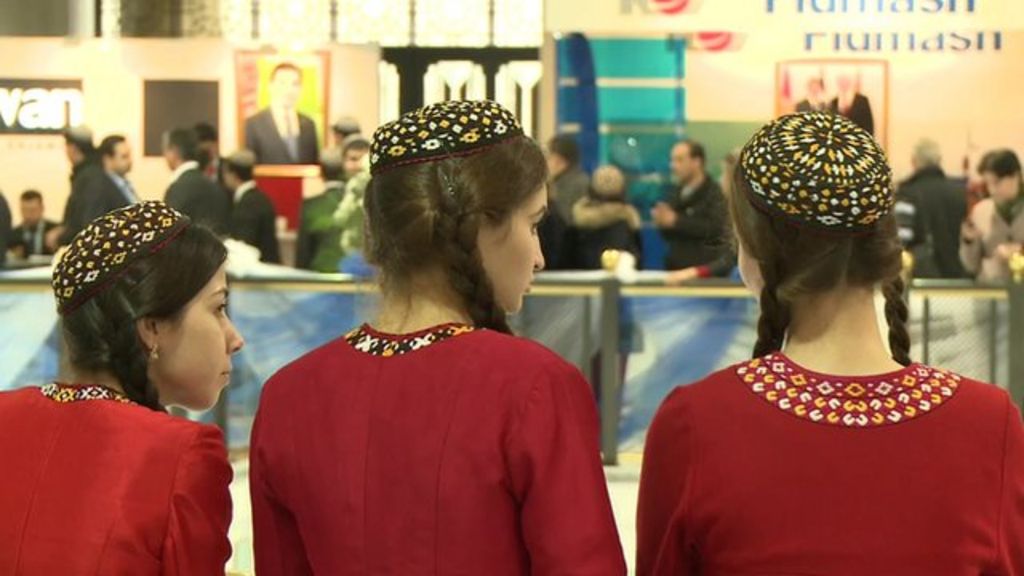
Cultural significance of ladies in Turkmenistan

Since men have been left with no alternative to search out employment in their very own country, many men left the country within the hunt of labor. This also led the nation towards drug habit, which flourished within the 90s, and triggered a substantial discount within the male population of the country able to present for his or her families.
The Government resolved the problem by allotting new plots of land for Protestant cemeteries. However, the shortage of such cemeteries forces Christians to travel nice distances to bury their deceased. Several media retailers reported incidents of aggression against Baptist Pastor Zulumbek Sarygulov in Osh Oblast.
History
Much of Karkalpakstan, in the west, is beneath risk of depopulation brought on by the environmental poisoning of the Aral Sea space. A research involving mitochondrial evaluation of a Byzantine-era inhabitants, whose samples have been gathered from excavations within the archaeological website of Sagalassos, discovered that the Byzantine population of Sagalassos might have left a genetic signature within the trendy Turkish populations. Modern-day samples from the nearby town of Ağlasun showed that lineages of East Eurasian descent assigned to macro-haplogroup M were discovered within the fashionable samples from Ağlasun.
The Ashgabat earthquake of 1948 killed over one hundred ten,000 individuals, amounting to two-thirds of town’s inhabitants. The Bahá’í Faith in Turkmenistan begins earlier than Russian advances into the area when the area was underneath the affect of Persia. By 1887 a community of Bahá’í refugees from religious violence in Persia had made a spiritual middle in Ashgabat. Shortly afterwards — by 1894 — Russia made Turkmenistan part of the Russian Empire. While the Bahá’í Faith unfold throughout the Russian Empire and attracted the eye of scholars and artists, the Bahá’í group in Ashgabat constructed the primary Bahá’í House of Worship, elected one of the first Bahá’í local administrative establishments and was a center of scholarship.